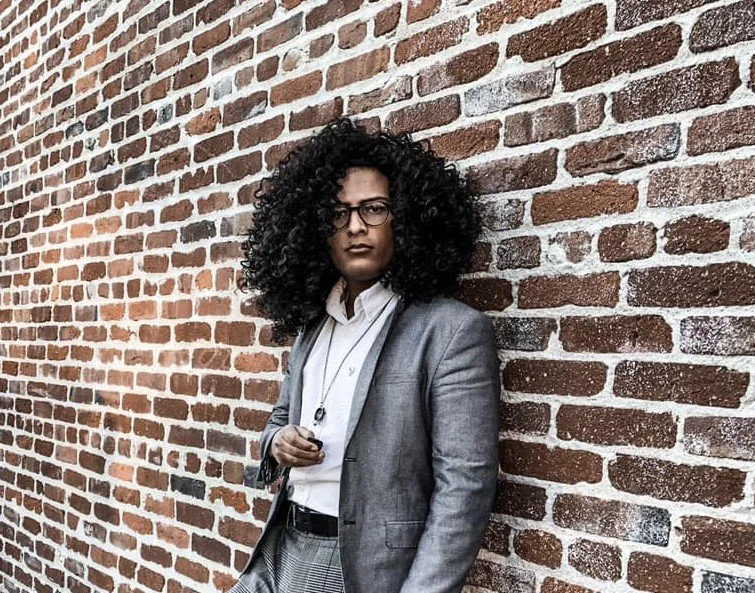
About Me
My name is Dr. Blu Buchanan.
I'm an assistant professor of sociology at UNC Asheville, where I focus on studying right-wing social movements and their particular racial, gendered, and sexual formations.
My work responds to intersecting lines of inquiry in both social movements and the literature on race, gender, and sexuality. A number of scholars have noted that conservative social movements are understudied. Inroads have been made by scholars like Kathleen Blee, Peter Simi, and Robert Futrell but non-heterosexual conservative organizations have yet to be explored in a substantive way. My work offers a unique window into the conservative strategies and tactics utilized by marginalized organizations, and how these organizations function as vectors for projects of masculinity and whiteness within sexual and gender communities.
The second line of inquiry intersecting with my research is the work done by scholars of sexual racism, particularly the ways in which whiteness and masculinity are expressed in non-normative sexual practices. Much of this scholarship has focused on individual-level actors, describing the ways in which sexual hierarchies of race and masculinity are created and maintained within queer spaces.
My work expands on this area of research, tracking the nuanced and patterned translation of sexual racism into collective political projects. By rethinking the boundaries of sexual racism, I argue that we can explain the dispersal of racial, gendered, and sexual ideologies within American society.
By tracking the organizational framing and contestations of these organizations, I trace the development and dispersal of white supremacy and sexual racism within organizations in order to connect individual practices, like misogyny and partner selection, to larger political organizing.
Building off the work I have done so far, my next project explores the role of nationalism in the radicalization of right-wing gay organizations in the United States over the past 10 years. What projects, and sources of amplification, are at work in the contemporary development of gay right-wing organizations? On a broader level, how is the emergence of a significant “gay right” in multiple countries, including Germany, Britain, and Canada, indicative of circuits of political and social power? Answering these questions is urgent for scholarly, material, and political reasons.